
Malabar Rock Pool (Malabar Bay Pool, Baths at Long Bay)
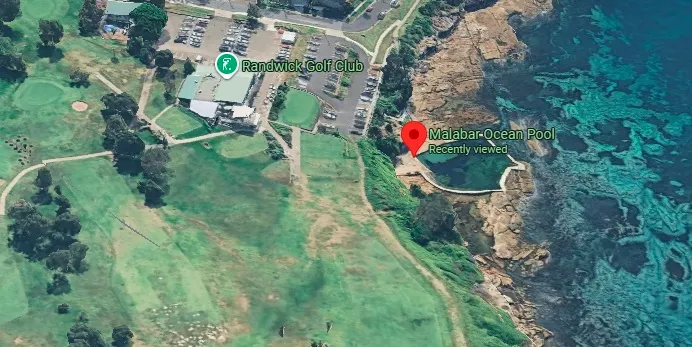
Malabar Pool is in Long Bay, below the Randwick Golf Club. The current pool is smaller than the pool shown on this site in early twentieth-century postcards.
Click to find location on AllSwims.au
Do you have a good photo we can use here? Please email us: allswims.au@yahoo.com
Historical notes Early colonial period Once a swampy area with a stream flowing to the beach and a camping place for Aboriginal people, who created paths down to Long Bay, this area became part of the land set aside to support colonial clergy and teachers.
Late 1800s Long Bay was a visitor attraction.
1890s A fine rock pool formed with boulders existed on the south side of Long Bay, near the site of the present golf club.
Early 1900s A small fishing village had grown up on Long Bay, which had become a popular picnic and weekend camping spot for city dwellers. People from inner Sydney suburbs like Paddington would come to the area to stay in weekenders.
1909 Long Bay had free public baths. Its ‘large swimming basin at the south-western corner containing buoyant seawater of varying depth’ gave ‘recurrent pleasure to visitors and residents’.
The State Reformatory for Women opened at Long Bay.
Around 1911 Randwick Council was proposing to build dressing-sheds and an enclosed swimming baths for ladies at Long Bay. The beach was popular with adults and children because of its beautifully clean sand and water and because it was believed to be seldom visited by sharks.
1914-1918 The State Penitentiary for male prisoners opened at Long Bay in 1914.
Land at Long Bay used for musketry practice was set aside for Defence purposes.
An ocean outfall constructed at Malabar in 1916 carried waste from the Homebush abattoir and other waste into the ocean. The waste plume attracted sharks and seabirds.
1920s Randwick Council promoted Long Bay as a ‘nice quiet bathing spot with a splendid reserve for picnics’.
1930s The 4,512-tonne Burns Philp ship Malabar was stranded in shallow water off the north headland on its 1931 maiden voyage. Over 30,000 sightseers came to visit the wreck and the area around Long Bay became known as Malabar
There was unemployment camp at Malabar in the Depression years.
1967 When the ANZAC rifle range at Liverpool closed, numerous rifle clubs transferred to Long Bay. The ANZAC Rifle Range at Malabar was on Commonwealth-owned land.
1970s The Long Bay Metropolitan Remand Centre opened in 1970.
The Department of Army renamed the Long Bay rifle range as the ANZAC rifle range in 1973.
Sewage from Malabar sustained vast numbers of the now-endangered wandering albatross. People still saw and smelled the sewage plume going all the way out to the horizon. The bay and the rock pool were eventually declared off-limits to bathers due to pollution from the Malabar sewer outfall and the surf club that had patrolled the beach closed down. The historic 150-metre sea pool fell into disrepair.
The NSW Department of Health requested that Randwick Council erect signs to warn people that the water was polluted from the Malabar sewer outfall.
1985 The principal of St Andrew’s Primary School at Malabar asked Randwick Council to plan restoration of the Malabar Pool, as the inground Heffron Park Pool (now known as the Des Renford Aquatic Centre) at Maroubra was so booked out, that local children had no learn-to-swim venue. Randwick aldermen insisted that the area would not be fit for swimming for decades after the planned upgrade of the ocean outfall.
Early 1990s Construction of the Deep Water Sewer Outfall at Malabar so improved the water quality in its vicinity, that Long Bay was once more fit for bathing. The outfall emptied 4.2 kilometres offshore from Boora Point.
1991 Stormwater and rain, rather than sewage and industrial waste were the major sources of pollution in the Bay.
1993 Malabar was back on the surfing circuit, but the Malabar rock pool had been long neglected. Six local schools requested the pool’s re-opening so that they could use it for swimming carnivals. State MP Bob Carr promised a $ for $ subsidy for the pool if his party won government. The incoming Randwick Mayor, Cr Charles Matthews, was also seeking contributions from the Water Board and local industry.
1994 The Malabar Beach and Foreshore Plan of Management recommended restoring the rock pool but improving its safety by reducing its size and deepening and flattening the pool. It also recommended providing a stroller ramp from the carpark to the pool, an outdoor shower and small toilet block and commencing work in 1994 financial year and continuing into the following year. Residents were keen to have the rock pool re-opened and water quality further improved.
1997 A plaque at the Malabar Pool testifies to the re-opening of the restored ocean pool in March by the Premier of NSW and the Mayor of Randwick and that funding for restoration was provided by Randwick City Council, Sydney Water and the coastal management program of the NSW Department of Land and Water Conservation.
1999 The waters of Malabar’s beach and the ocean pool were crystal-clear.
2000 As part of its State of the Environment (SOE) report, Randwick City Council reported on water monitoring in the Malabar pool.
2001 Malabar’s large open spaces included Malabar Headland, the ANZAC Rifle Range, and Randwick Golf course. Its least open space was the Long Bay Correctional Centre housing around 2,000 inmates.
2002 Dumping of oil and paint prompted a $30,000 clean-up involving Randwick City Council, the NSW EPA and the Fire Brigade’s hazardous materials team. The EPA said that while the paint had damaged seagrasses in the pool, most of the spill was contained in the pool, so there was unlikely to be any long-term environmental damage. Randwick Council offered a reward for information leading to a successful prosecution and considered installing floodlights and video surveillance equipment.
2005 There were demands that the Commonwealth Government hand the Malabar headland over to the people of NSW as open space.
2006 There are still occasional complaints from residents and beachgoers about foul odours coming from the sewage treatment plant at Malabar, the largest of the ten coastal sewage plants operated by Sydney Water.
———
Historical data and text adapted from All into Ocean Pools Inc (originally published at allintooceanpoolsinc.org, including research contributed by Marie-Louise McDermott), retrieved via the Internet Archive’s Wayback Machine. Used under Creative Commons Attribution guidelines.
Allintooceanpoolsinc.org was a great resource which has been lost to the internet and we have restored the page content to keep it live and available. If you have updates or images related to this please contact us to add them. We also want the original authors to contact us. Thank you
Related articles
More in Rock Pools →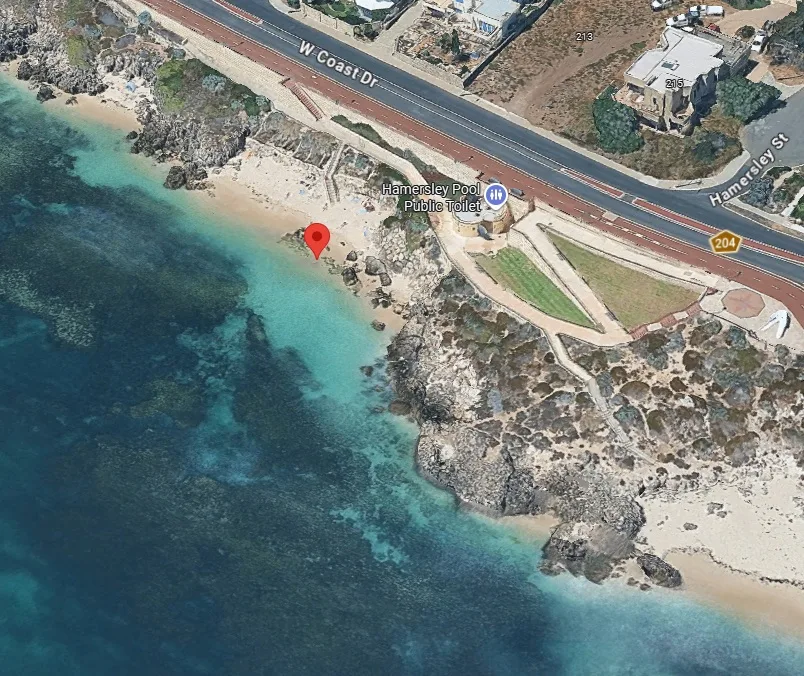
Hamersley Pool
Hamersley Pool is an informal. reef-enclosed, tidal pool recorded as attracting swimmers and bathers since the early 20th century. (Hammersley Pool, Hamersley’s Pool)
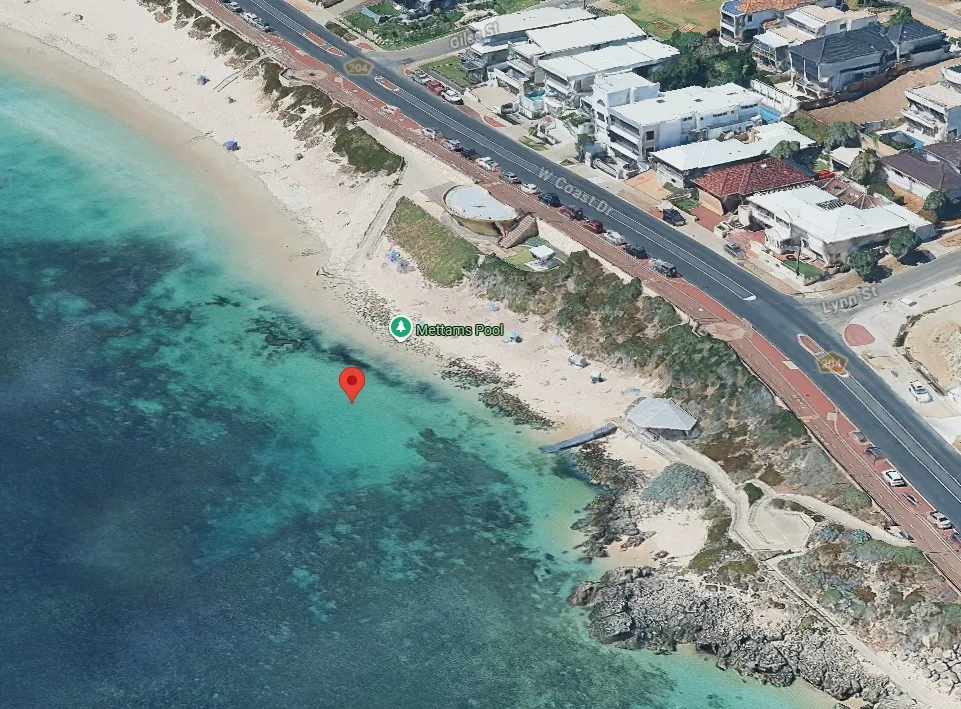
Mettams Pool
A reef shelters this large, informal, ‘improved’, ‘natural’ rock pool developed through the efforts of one man, his children and grandchildren. It has long…
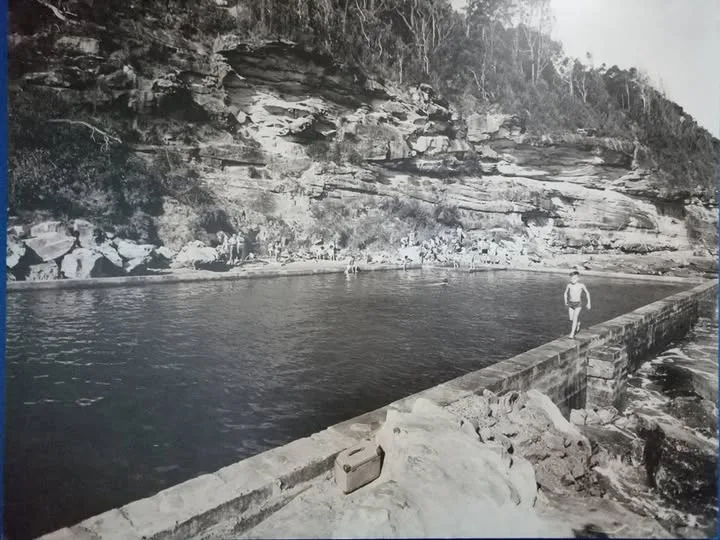
Umina Beach (ghost pool)
South Umina Tidal swimming pool was beautiful with the rock face above it but mostly destroyed in storms 1974.