
Soldiers Baths
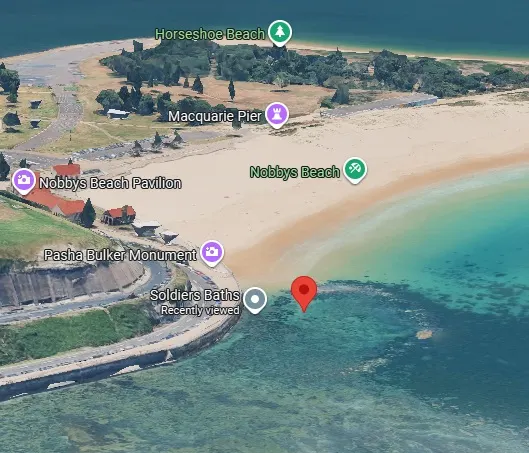
A large ring-of-rocks pool below Newcastle’s Fort Scratchley near Nobbys Beach. By 1883, large rocks formed a seawall defining an oval pool 180 yards long with a floor of coal shale and sand. Nowdays, at high tide, it can be easier to see the plaque on the Bathers Way that commemorates the pool, than the pool itself. Still a good place to snorkel.
Click to find location on AllSwims.au
Do you have a good photo we can use here? Please email us: allswims.au@yahoo.com
Historical notes 1850-1879 Male and female bathers had to use separate areas of Newcastle’s beaches or bathe at separate time and agitation for public sea baths grew. Railways connected Hunter Valley coal mines to the port of Newcastle and later simplified travel between Newcastle and the Hunter Valley settlements. The Great Northern Railway carried around 30,00 passengers in 1857.
1880 s The Newcastle Borough Council permitted bathing in the ocean behind the Newcastle Hospital at any hour, provided bathers wore ‘suitable bathing dress’ , dedicated six acres of rock beneath Signal Hill for public baths and began constructing the Soldiers Baths. In June 1882, heavy seas washed away the partly constructed baths.
Opened in 1883, the Soldiers Baths consisted of large rocks forming a seawall defining an oval pool 180 yards long with a floor of coal shale and sand.
Steam trams began operating in Newcastle, the second largest city in the colony of New South Wales. Railways were drawing trade away from the steamship companies especially after completion of the Hawkesbury Railway Bridge project finally united the Great Northern Railroad to Sydney and the rest of New South Wales.
1890s Newcastle was ‘the great emporium of the coal trade in the southern hemisphere and the port of shipment for nearly all the wool grown in the northern and north-western districts’ of the colony of New South Wales. To defend that trade, Newcastle was strongly fortified. The guns from Fort Scratchley on Allen’s Hill and other guns on Shepherd’s Hill defended the coast, the harbour, the city and its coal supplies.
Early twentieth century Storms damaged the Soldiers Baths and a build-up of sand made the baths unswimmable. By 1907, neither Newcastle’s indoor Corporation Baths nor its Soldiers Baths were considered fit for use. The Soldiers Baths were, however, still being used in 1909, when a cliff overhanging the baths gave way and soldiers bathing in the pool were lucky to survive.
2006 A heritage panel on the Bathers Way walking track provides some information on the Soldiers Baths. At high tide, it can be easier to see the plaque on the Bathers Way that commemorates the pool, than the pool itself.
———
Historical data and text adapted from All into Ocean Pools Inc (originally published at allintooceanpoolsinc.org, including research contributed by Marie-Louise McDermott), retrieved via the Internet Archive’s Wayback Machine. Used under Creative Commons Attribution guidelines.
Allintooceanpoolsinc.org was a great resource which has been lost to the internet and we have restored the page content to keep it live and available. If you have updates or images related to this please contact us to add them. We also want the original authors to contact us. Thank you
Related articles
More in Rock Pools →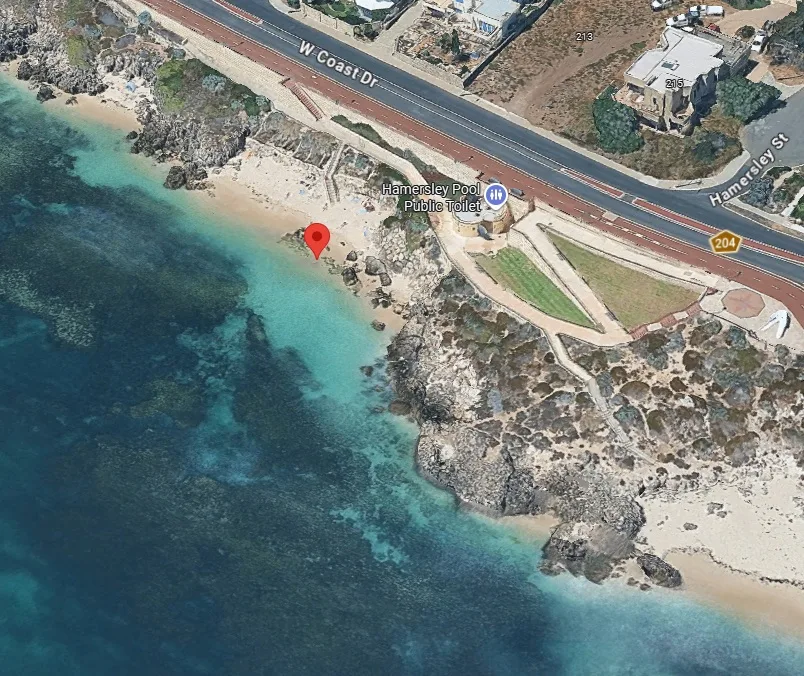
Hamersley Pool
Hamersley Pool is an informal. reef-enclosed, tidal pool recorded as attracting swimmers and bathers since the early 20th century. (Hammersley Pool, Hamersley’s Pool)
Mettams Pool
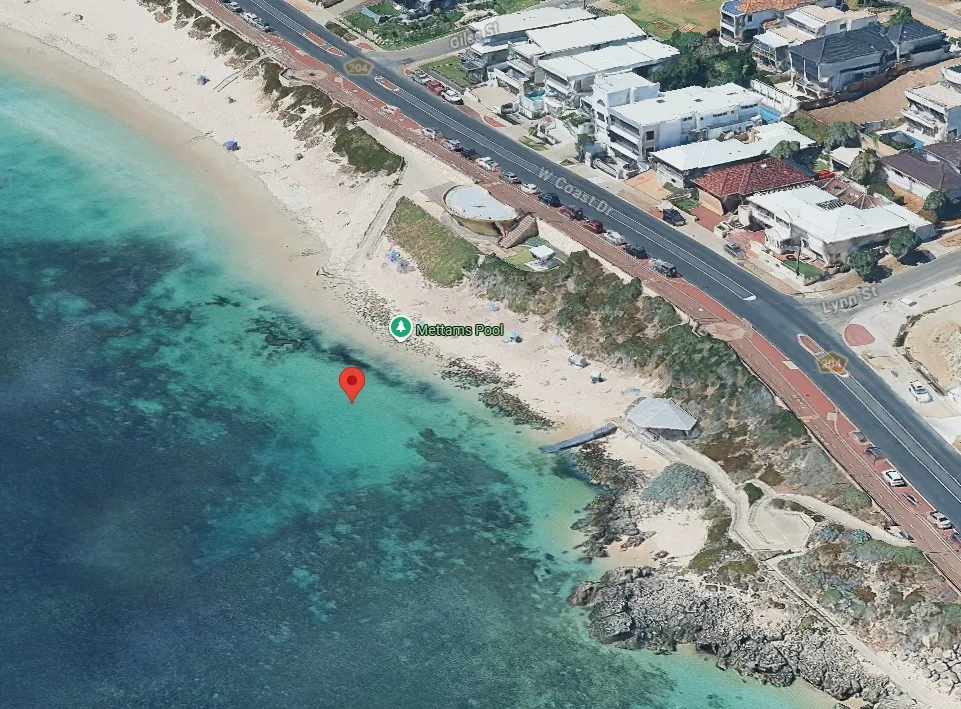
A reef shelters this large, informal, ‘improved’, ‘natural’ rock pool developed through the efforts of one man, his children and grandchildren. It has long…
Umina Beach (ghost pool)
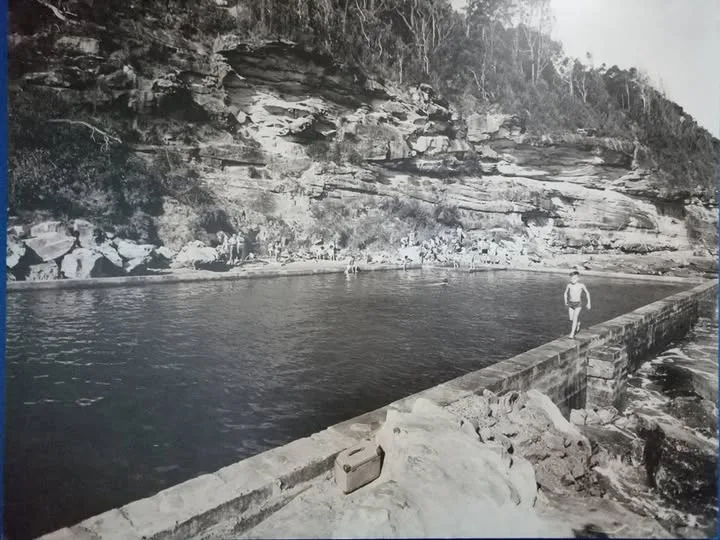
South Umina Tidal swimming pool was beautiful with the rock face above it but mostly destroyed in storms 1974.